Hindu Festivals
Maa Shailaputri: The First Navadurga and the Power of a Strong Beginning
Kushal Agarwal · 12 Oct 2026 · 10 min read
Maa Shailaputri: Where the Journey of Navadurga Begins
Before the discipline of spiritual practice, before the courage to confront adversity and before the transformation associated with the later forms of Durga, there is a beginning.
In the Navadurga tradition, that beginning is Maa Shailaputri.
Worshipped on the first day of Navratri, Shailaputri is the first of the nine forms of the Goddess honoured during the festival. Her name means daughter of the mountain, referring to her birth as the daughter of Himavan, the personification of the Himalayas.
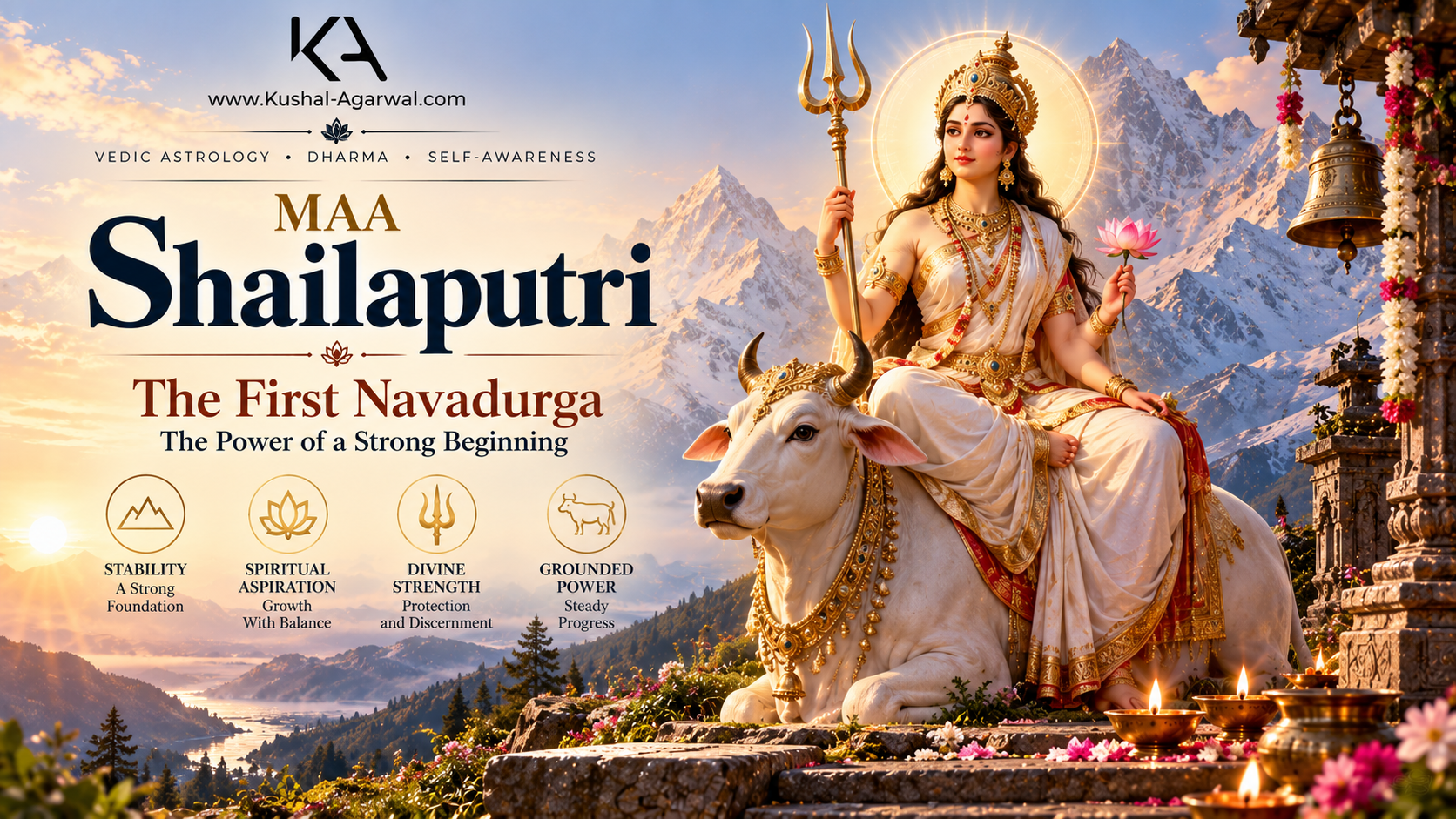
Her traditional image is simple yet powerful. She rides a bull, holds a trident in one hand and a lotus in the other, and is identified with Parvati, the divine consort of Shiva.
But Shailaputri is more than the opening figure in a sequence of nine deities. Her place at the beginning invites reflection on a fundamental principle: before growth can be sustained, a foundation must be established.
This is the deeper theme through which we can understand her story, iconography and place in Navratri worship.
Who Is Maa Shailaputri?
The Sanskrit name Shailaputri combines shaila, meaning mountain, and putri, meaning daughter. She is the daughter of Himavan and is identified with Goddess Parvati.
Within the Navadurga tradition, she is worshipped on the first day of both Chaitra and Sharad Navratri.
Her identity is also connected with the story of Sati, Shiva's earlier consort, who is said to have been reborn as Parvati after her death at Daksha's sacrificial gathering. In her new birth as the daughter of the mountain king, the Goddess continues her connection with Shiva.
The narrative is told with variations across Hindu Puranic traditions. Its central devotional theme is the continuity of the Goddess and her relationship with Shiva across different manifestations.
Shailaputri therefore represents both a beginning and a continuation. She begins the Navadurga sequence, while her identity as Parvati connects her to an enduring sacred narrative.
The Story of Sati, Parvati and the Daughter of the Himalayas
To understand Shailaputri, it helps to understand the story of Sati.
According to a widely known Puranic narrative, Sati was the daughter of Prajapati Daksha and the consort of Shiva. Daksha organised a great sacrifice but did not invite Shiva. Sati nevertheless attended the gathering, where Shiva was insulted.
Unable to bear the humiliation directed towards her husband, Sati gave up her life in the sacrificial fire, according to the traditional account.
After this event, the Goddess was reborn as Parvati, the daughter of Himavan and Maina. She undertook intense spiritual discipline and eventually united with Shiva once again.
As the daughter of the mountain, she became known as Shailaputri.
This story is not merely about a change of birth or identity. Devotional interpretations emphasise the continuity of Shakti, the divine feminine power, across different forms.
It also introduces an important distinction: the Goddess's story does not begin with the fierce battle against an adversary. It begins with birth, identity, grounding and the re-establishment of a foundation.
That is precisely why Shailaputri occupies the first place in the Navadurga sequence.
The Symbolism of Maa Shailaputri's Form
The Mountain: Stability and Endurance
The mountain is the defining element of Shailaputri's identity.
Mountains are enduring features of the natural world. They evoke stability, endurance and the capacity to remain present through changing seasons.
The symbolism offers a useful reflection on human life. Ambition may inspire us to begin a project, a spiritual practice or a new chapter, but motivation alone rarely sustains it.
A strong foundation requires consistency, patience and the willingness to continue when the initial excitement fades.
The mountain also reminds us that stability does not mean immobility. Mountains exist within a changing natural world. Likewise, a grounded person can adapt without abandoning fundamental principles.
The lesson is not to resist all change. It is to develop enough inner steadiness to navigate change without losing direction.
Nandi, the Bull: Strength Under Discipline
Maa Shailaputri is traditionally depicted riding a bull, identified with Nandi in her iconography.
The bull evokes physical strength, steadiness and endurance. Within the broader Shaiva tradition, Nandi also has a close association with Shiva.
As a symbol, the bull invites reflection on the relationship between power and direction.
Raw energy is not the same as useful strength. Ambition without discipline can become restlessness. Determination without judgement can become stubbornness. Confidence without humility can lead to avoidable mistakes.
The symbolism of Shailaputri encourages strength that is steady rather than impulsive.
A person who can maintain a commitment, withstand setbacks and act consistently towards a meaningful objective often possesses a more durable form of strength than someone who relies on bursts of enthusiasm.
The Trident: Power and Protection
The trident, or trishula, is one of the most recognisable attributes associated with the Goddess.
Its significance varies across Hindu traditions and interpretive lineages. It is broadly associated with divine power, protection and the ability to confront destructive forces.
Some devotional interpretations also connect the three prongs with triads such as creation, preservation and dissolution, or the three gunas—sattva, rajas and tamas. These are interpretive associations rather than a single explanation that must apply to every depiction.
For the devotee, the trident can serve as a reminder that stability does not require helplessness.
A grounded person can remain peaceful while protecting important boundaries. Patience does not mean accepting every injustice, and humility does not mean abandoning discernment.
The challenge is to use strength responsibly.
The Lotus: Purity and Spiritual Aspiration
The lotus is another prominent symbol in Hindu religious imagery. It is associated with purity, spiritual unfolding and beauty that emerges from difficult surroundings.
In Shailaputri's iconography, the lotus complements the mountain and the bull. The mountain suggests stability; the bull suggests strength; the lotus evokes the possibility of spiritual growth.
Together, these symbols suggest that a firm foundation should not become rigidity. Stability should create the conditions for growth, not prevent it.
A person can remain rooted in ethical principles while continuing to learn, change and deepen their understanding.
Why Is Maa Shailaputri Worshipped First?
The Navadurga sequence begins with Shailaputri because she occupies the first position in the traditional series of nine forms.
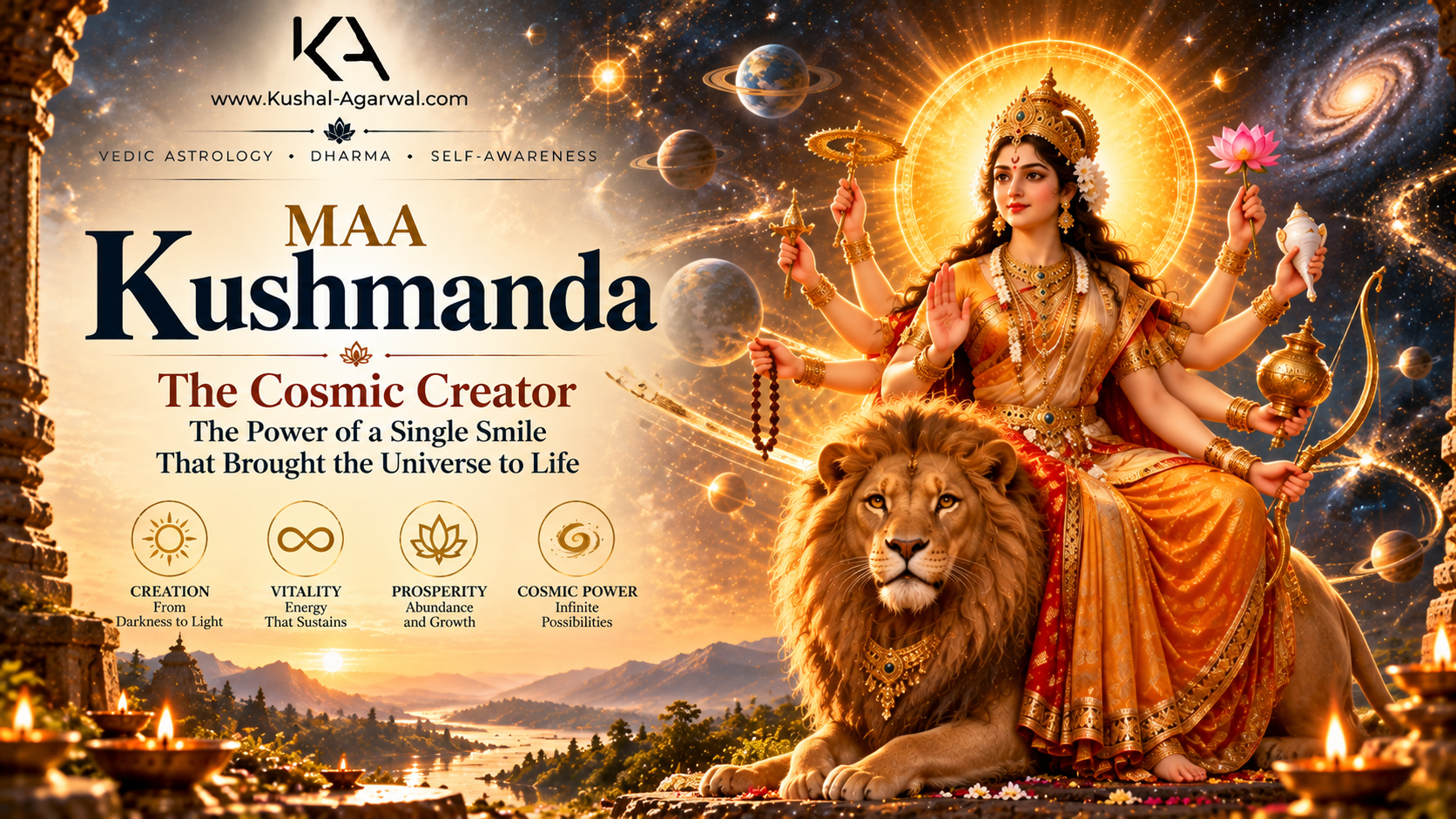
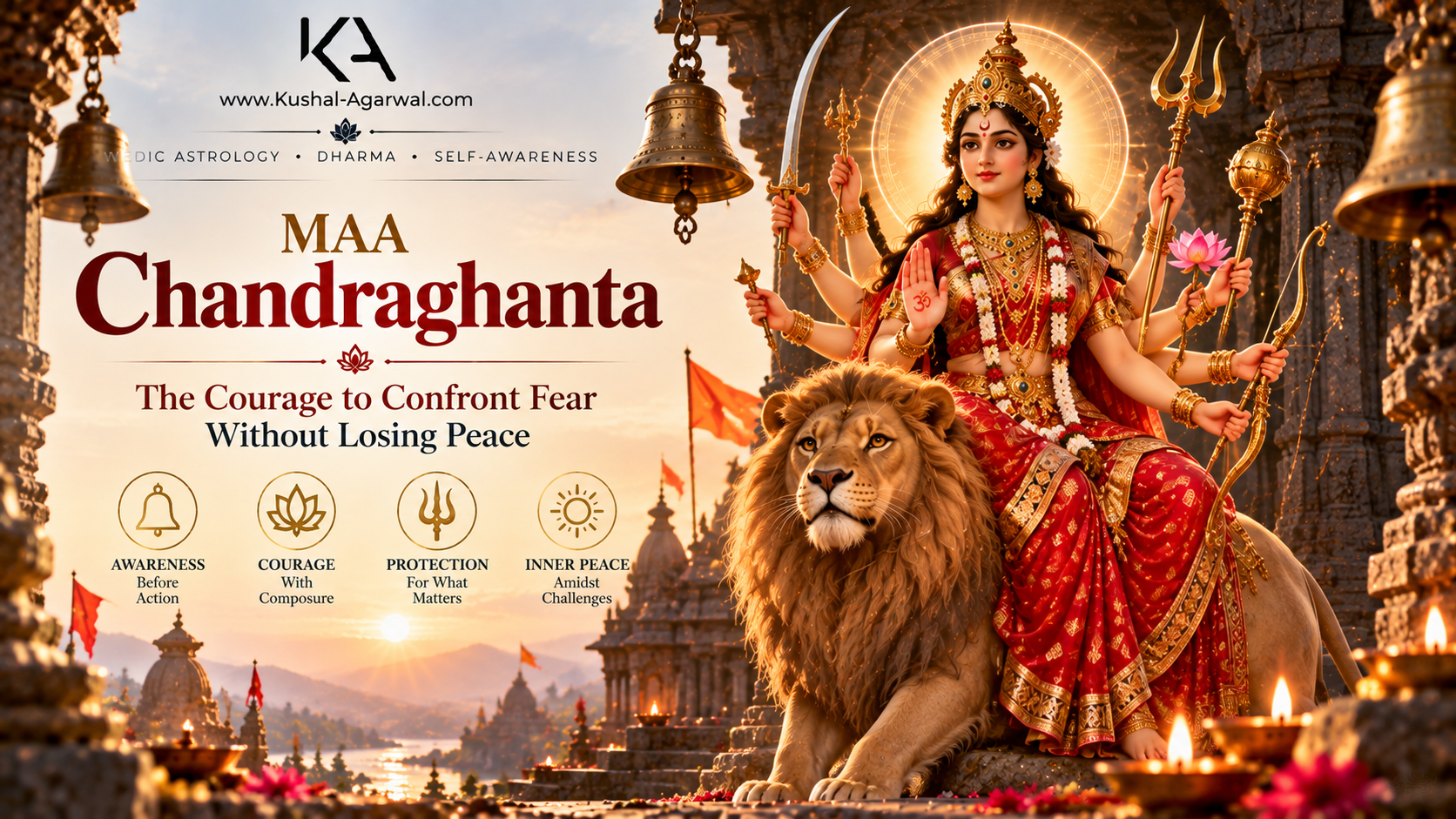
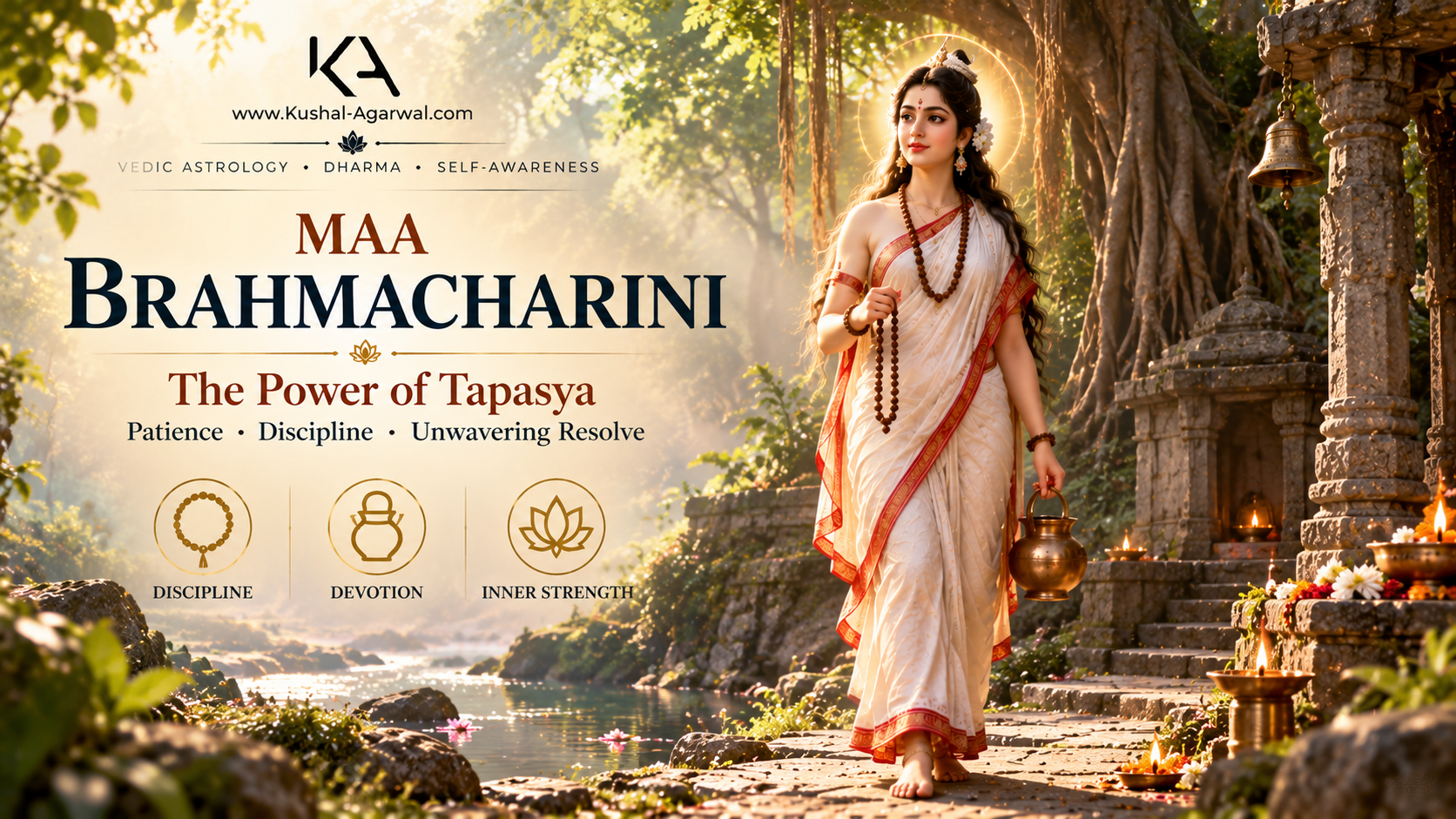
A broader spiritual interpretation sees her as representing the foundation upon which subsequent qualities can develop. The sequence then moves to Brahmacharini, associated with austerity and disciplined devotion, followed by Chandraghanta, whose iconography expresses courage and readiness.
The later forms introduce further dimensions of divine power, protection, transformation and fulfilment.
It is tempting to treat these nine forms as a rigid psychological programme through which every devotee must progress. A more careful approach is to recognise that this is one way of interpreting the sequence, not a universal doctrinal rule.
Nevertheless, the ordering offers a compelling reflection: discipline is easier to sustain when life has some stability, and courage is more useful when guided by sound principles.
The beginning matters because it establishes the ground on which the rest of the journey unfolds.
Maa Shailaputri and the Muladhara Chakra
Some contemporary yoga and tantric interpretations associate Shailaputri with the Muladhara, commonly known as the root chakra.
The Muladhara is understood within these systems as a foundational energy centre associated with grounding and stability. This association fits naturally with Shailaputri's mountain symbolism and her position at the beginning of the Navadurga sequence.
However, this chakra association should be presented with appropriate context. Hindu traditions are diverse, and the same detailed chakra mapping is not universally prescribed across every school of Goddess worship.
For practitioners who work within a tradition that makes this connection, Shailaputri can be a focus for contemplating stability, presence and the grounding of spiritual practice.
The key is to distinguish a particular yogic or tantric interpretation from a claim that all Hindu traditions understand the Goddess in exactly the same way.
Is Maa Shailaputri Associated With the Moon in Vedic Astrology?
Some traditional Navadurga references associate Shailaputri with Chandra, the Moon, and devotional worship of her may be recommended within certain traditions in connection with lunar concerns.
This association should not be confused with a universal Jyotish rule.
In Vedic astrology, the Moon is assessed through the horoscope's specific placements, dignity, house ownership, aspects, conjunctions and relevant divisional or timing considerations, depending on the school of interpretation.
A person's Moon cannot be comprehensively assessed merely by identifying the Navadurga form associated with the day of Navratri.
Similarly, worship of a Goddess may be part of a person's spiritual or remedial practice, but it is not responsible to promise that it will automatically eliminate every difficult lunar placement or produce a particular material outcome.
For an astrologer, this distinction is important. Religious symbolism, traditional upasana and horoscope interpretation can inform one another without being treated as interchangeable systems.
How Is Maa Shailaputri Worshipped?
Devotees worship Shailaputri on the first day of Navratri through puja, mantra recitation, offerings and prayer. In many households, the beginning of Navratri is also marked by Ghatasthapana or Kalash Sthapana, according to the relevant tradition and local Panchang.
A commonly recited mantra is:
ॐ देवी शैलपुत्र्यै नमः॥
Om Devi Shailaputryai Namah.
This is a devotional salutation to the Goddess.
The precise puja procedure, offerings, colours and auspicious timings vary across regions, family customs and ritual traditions. Those observing the festival should follow the practices of their own sampradaya or a reliable local Panchang for date-specific timings.
The central purpose of worship is devotion and remembrance. The practice can be accompanied by reflection on the qualities associated with Shailaputri: steadiness, patience, strength and the willingness to begin a worthwhile journey with sincerity.
The Deeper Lesson of Shailaputri: Build Before You Rise
Modern life places enormous emphasis on speed. We are encouraged to seek immediate results, rapid growth and visible achievement.
But the symbolism of Shailaputri points in another direction.
Before a tree can grow tall, it needs roots. Before a serious practice can mature, it needs consistency. Before a person can carry greater responsibility, they need a foundation of judgement, discipline and integrity.
The same principle applies to spiritual life.
A person may be drawn towards advanced practices, esoteric knowledge or dramatic experiences. Yet the foundations—ethical conduct, regular practice, patience and clarity of intention—remain essential.
Shailaputri does not represent the entire spiritual journey. She represents its beginning.
That beginning deserves attention because a weak foundation can undermine even the most ambitious undertaking.
The mountain is not hurried. It does not need to prove its strength through constant movement. Its presence itself becomes a symbol of endurance.
This is the quality that makes Shailaputri an appropriate opening to Navratri: the reminder that lasting progress requires something more dependable than enthusiasm.
The First Step of the Navadurga Journey
Maa Shailaputri stands at the beginning of the ninefold worship of the Goddess. Her name connects her to the Himalayas, her story links her with Sati and Parvati, and her iconography brings together the mountain, the bull, the trident and the lotus.
These symbols can be approached devotionally, ritually and philosophically. Their interpretations differ across traditions, but they all provide a rich starting point for reflecting on the nature of strength and spiritual aspiration.
The lesson of Shailaputri is not that life must remain unchanged. It is that meaningful change needs a foundation.
As the Navadurga sequence begins, her image invites us to ask a simple question:
What am I building my life upon?
The answer matters more than the speed at which we move. A strong beginning does not guarantee an effortless journey, but it gives the journey something firm on which to stand.
SOURCES:
- Drik Panchang — Goddess Shailputri: https://www.drikpanchang.com/hindu-goddesses/parvati/durga/navdurga-shailputri.html
- The Art of Living — Maa Shailaputri: https://www.artofliving.org/in-en/navratri/shailaputri
- KaalPanchang — Shailaputri: https://kaalpanchang.com/figures/shailaputri
- Shiva Purana and Devi Bhagavata Purana — traditional narratives concerning Sati, Parvati and Shiva; retellings vary across traditions.
SUGGESTED INTERNAL LINKS:
- Sharad Navratri 2026: The Deeper Meaning of the Nine Nights of Maa Durga
- Mahalaya 2026: The Call of the Ancestors and the Arrival of Maa Durga
- Maa Chandraghanta: The Power of Courage Without Losing Inner Peace
Explore more articles on Vedic Astrology, Hindu spiritual traditions and occult practice at https://kushal-agarwal.com/.
Want this read for your own chart?
Every session blends Vedic astrology, numerology and counselling psychology — your chart read as architecture, not prophecy. Bring the decision you are actually sitting with, and leave with timing, language and a next step.